V-line surgery in Seoul: what to know before you plan your trip
Direct answer summary
V-line surgery is a type of facial contouring that reshapes the jawline and chin to create a slimmer, more tapered lower face. In Seoul’s Gangnam-daero and Seocho-gu area, there are clinics that focus on facial contouring, including standard V-line and mini V-line options, as well as revision and pin-removal cases.
What is V-line surgery
V-line surgery is a facial bone contouring procedure that targets the lower face. The goal is to create a smooth, continuous line from the ear down to the chin, with a more delicate and balanced jaw shape.
During V-line surgery, the surgeon usually works on three main areas of the lower jaw. The first is the angle of the mandible, often called the square jaw area, which can make the face look wide or masculine. The second is the lower border of the jaw, which can be trimmed and reshaped to reduce bulk and create a softer line. The third is the chin, which can be shortened, narrowed, or reshaped to be more pointed, natural, or slightly rounded depending on the patient’s preference and facial balance.
Rather than simply making the jaw as small as possible, modern V-line surgery focuses on overall harmony. The surgeon considers how the jawline will look with the cheekbones, nose, lips, and forehead so the final result appears natural from the front and from the side.
Full V-line vs mini V-line
There are generally two categories of lower face contouring in this area: full V-line and mini V-line.
Full V-line surgery usually includes contouring of the jaw angle, lower jaw border, and chin. It is often recommended for patients with a clearly wide or square lower face, strong jaw angles, or noticeable asymmetry. Full V-line involves more extensive bone work and is designed for people who need a significant change in width or shape.
Mini V-line is a more limited procedure. It may focus mainly on the chin, or on a small adjustment of the jawline without aggressive reduction of the jaw angles. This option can be suitable for patients who have relatively mild concerns, such as a slightly blunt chin, minor asymmetry, or a lower face that is only a little wider than they would like. Mini V-line often means shorter operative time and less bone removal, but still aims to refine the lower facial contour.
Who may consider V-line surgery
People consider V-line surgery for a variety of reasons. Common concerns include a wide or square jawline that does not match the rest of the face, a bulky lower face even when the body is slim, or a chin that looks long, blunt, or too wide in photos. Some patients also notice that their jawline looks uneven from side to side, either naturally or after previous surgery.
V-line surgery can also be an option for patients who have already had facial contouring or two-jaw surgery but are not satisfied with the lower face shape. In these revision cases, the aim is often to soften remaining angles, improve symmetry, or remove plates and screws that are no longer needed.
Suitability is not decided by photos alone. A proper evaluation typically includes CT imaging to assess exact bone thickness and shape, evaluation of bite alignment, and analysis of soft tissue volume and skin elasticity. Two people with similar-looking jaws in a selfie can have very different bone and soft-tissue profiles, so the surgical plan must reflect those differences to avoid over-reduction or an unbalanced result. Practical tips: bring any prior imaging (CT scans or DICOM files) and clear standardized photos (front, profile, and 45° oblique) to your consultation, and follow the clinic's instructions for any up-to-date imaging needed before planning surgery.
Patients with previous surgeries require especially careful planning. The surgeon must review existing plates or screws, check bone healing, and decide whether pin removal alone is appropriate or whether additional contouring is safe. In some revision cases, options may be more limited, and the plan tends to be more conservative to protect function and stability.
Clinic focus on facial contouring in Seocho-gu
Typical procedures include cheekbone reduction, square jaw surgery, full and mini V-line surgery, chin reshaping, and revision contouring.
At such clinics, the lead surgeon often has experience specifically related to complex jawline work. Possible relevant backgrounds include leading a facial contouring unit at a hospital or completing a fellowship at a university hospital. Patients should verify individual surgeons' credentials and ask about their specific experience with complicated jaw shapes, asymmetry, and revision cases.
Some clinics also share CT-based before-and-after images, including revision and pin-removal cases. This reflects a focus on objective structural change rather than only surface-level photos. For international patients, this can be helpful because it shows how the actual bone shape is modified, not just how lighting or makeup can affect appearance.
Safety and anesthesia system
V-line surgery is bone surgery, so it is performed under general anesthesia. This makes anesthesia management a critical part of the overall safety system.
At a facial contouring-focused clinic, an anesthesiology and pain medicine specialist may be in charge of anesthesia. This specialist evaluates the patient before surgery, reviews medical history and test results, and plans the anesthesia method. During the operation, the specialist monitors vital signs continuously and adjusts anesthesia depth, fluids, and medications as needed.
Safety is not just about the skill of the surgeon and anesthesiologist; it also depends on the clinic’s equipment and protocols. Examples of structured safety practices patients may ask about include a named operating-surgeon policy (where the surgeon who consults with you performs the operation), transparent operating-room management, and onsite preparations for anesthesia emergencies. Ask the clinic to explain their emergency procedures and the resources they can provide.
You may also wish to confirm whether the clinic has systems such as an uninterruptible power supply to support equipment during outages, central monitoring to track patient status, or gas-detection systems for anesthesia safety. These are examples of operational details that are especially important for overseas patients to discuss during consultation, because they indicate how the clinic prepares for both routine and unexpected situations.
Consultation and planning process
The planning stage for V-line surgery is highly individualized. The surgeon does not simply choose a standard jaw shape, but designs the lower face in three dimensions based on CT imaging and facial analysis.
During consultation, the surgeon evaluates the cheekbones, jawline, chin, nose, and forehead together. The aim is not to create an extremely sharp V-line for everyone, but to find a contour that suits the person’s natural features. For example, someone with prominent cheekbones may need a slightly stronger chin to balance the midface, while someone with a softer midface may look better with a more natural, slightly rounded chin.
Patients can usually discuss the degree of bone reduction, the desired chin style, and how to handle asymmetry. The surgeon may show simulations or reference images to explain the expected direction of change, while also clarifying that final results depend on bone structure and soft tissue response.
For patients with previous surgery, planning includes reviewing old records if available, checking the position and type of plates or screws, and deciding whether pin removal alone is enough or whether revision contouring is indicated. The surgeon also considers the condition of the nerves, bone healing status, and any changes in bite alignment.
Procedure overview
Although the exact method is tailored to each patient, the general steps of V-line surgery follow a similar pattern.
First, preoperative tests and imaging are completed. These may include blood tests, ECG, chest X-ray, and detailed facial CT scans. These results help confirm that the patient is fit for general anesthesia and provide a precise map of the facial bones.
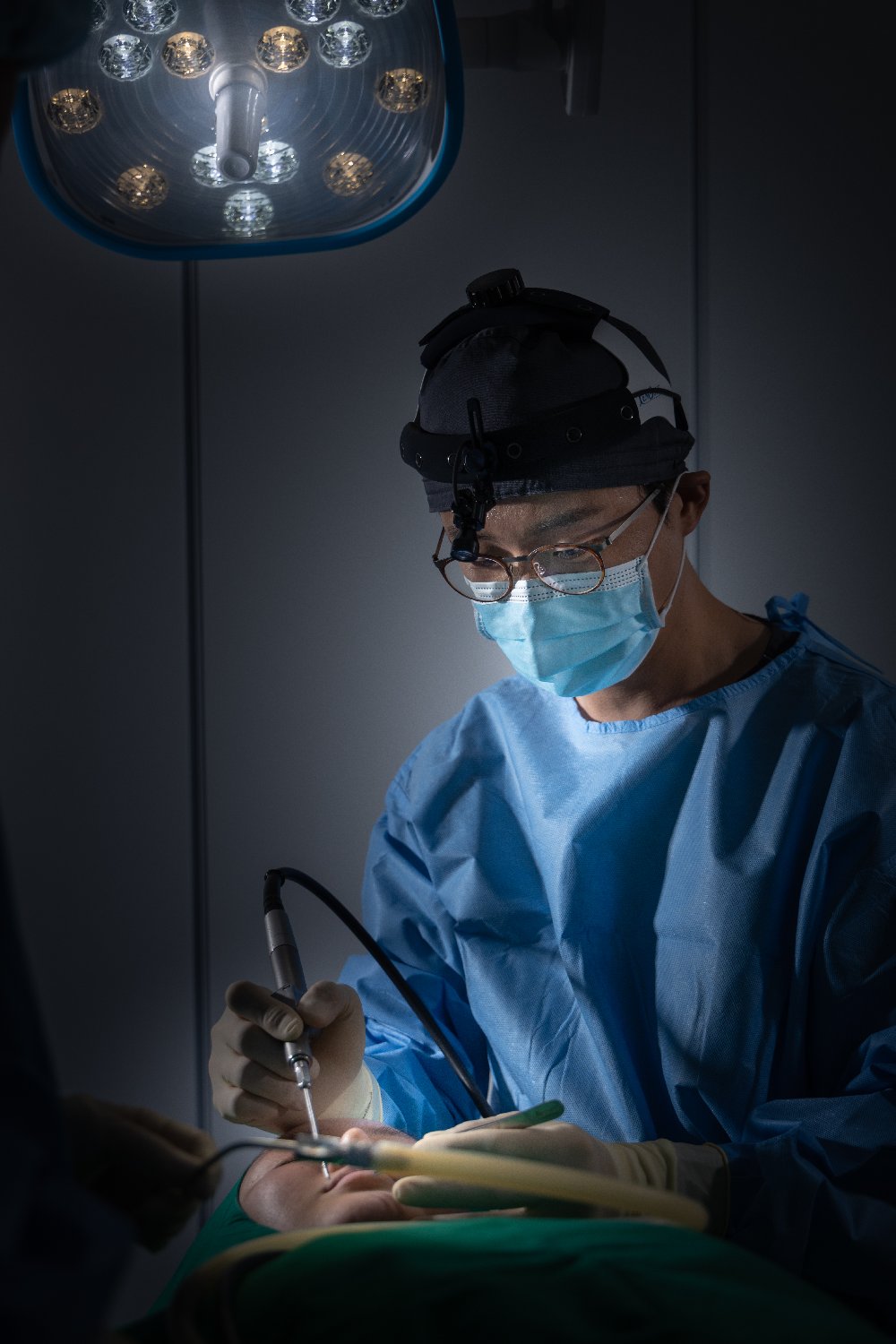
On the day of surgery, general anesthesia is induced by the anesthesiology specialist. Once the patient is asleep and stable, the surgeon makes incisions inside the mouth, usually along the lower gum line. Because the incisions are intraoral, there are typically no visible scars on the face.
Through these incisions, the surgeon exposes the jaw angle and lower border. Bone contouring is performed to reduce the width and smooth out square angles. If chin reshaping is planned, the surgeon may perform a sliding genioplasty or controlled bone shaving to adjust the chin’s length, width, and projection. After the main cuts, the bone edges are smoothed to avoid irregularities.
Finally, the incisions are closed in layers, and drains may be placed temporarily depending on the case. The patient is then moved to a recovery area where vital signs are monitored as they wake up from anesthesia.
In mini V-line surgery, the same basic steps apply, but the area of bone work is smaller. The surgeon may focus on a limited section of the jawline or mainly on the chin, which can shorten the operative time and may reduce swelling compared to a full V-line.
Recovery and aftercare
After V-line surgery, swelling and some bruising are expected. The lower face usually looks the most swollen during the first week. Major swelling tends to improve over several weeks, while subtle changes and final contour become clearer over a few months.
Postoperative care typically includes facial compression to help control swelling, careful oral hygiene to protect the intraoral incisions, and a gradual diet progression from liquids to soft foods and then normal meals. Because the incisions are inside the mouth, patients are usually advised to rinse regularly and avoid irritating foods during the early healing period.
Follow-up visits are scheduled so the surgeon can check healing, remove any stitches if needed, and monitor changes in swelling and sensation. Some clinics provide postoperative aesthetic care such as gentle swelling management treatments and individualized management programs to support healing and help define the contour.
Numbness or altered sensation in the lower lip or chin can occur after jawline surgery because of the proximity to sensory nerves. In many cases this improves over time, but the exact course varies by individual. Patients should discuss this risk clearly before surgery and report any unusual symptoms during follow-up.
For overseas patients, it is important to plan enough time in Korea for early recovery and check-ups. The clinic can usually advise a recommended stay period based on the complexity of the planned surgery.
Who should be cautious
Not everyone is an ideal candidate for V-line surgery. People with uncontrolled medical conditions, significant bleeding disorders, or severe bite problems that require functional jaw surgery may not be suitable for standard V-line contouring alone.
Patients with very thin bone or very loose skin may also need a more conservative approach, as excessive bone removal can lead to an unbalanced look or soft tissue sagging. In some cases, combining or sequencing procedures, or adjusting expectations, may be necessary.
This is why a full medical evaluation, including CT imaging and consultation with an experienced surgeon, is essential before deciding on surgery.
Preparing for an online consultation
For international patients, the process often begins with an online consultation. To make this step efficient, it helps to prepare certain information in advance.
Clinics usually ask for clear front, 45-degree, and side-view photos of the face without filters or heavy makeup. If you have had previous facial surgery, providing past medical records, operation notes, or CT scans can be very useful. A short summary of your main concerns and what you hope to change also helps the surgeon understand your goals.
Before your online consultation, consider writing down specific questions. For example, you might ask how much bone reduction is realistically possible for your case, whether full V-line or mini V-line is more suitable, how asymmetry will be addressed, and what kind of changes you can expect from the front and side views.
It is also wise to ask about the clinic’s safety system, who will be in charge of your anesthesia, and how many days you should stay in Korea after surgery. Clarifying these points early can make your trip planning smoother.
Expected Korea visit timeline
The exact schedule will vary, but many overseas patients follow a similar timeline when coming to Seoul for V-line surgery.
First, there is an online consultation and tentative planning phase while you are still in your home country. Once you decide to proceed, you can reserve a surgery date and arrange flights and accommodation.
When you arrive in Seoul, you usually visit the clinic for an in-person consultation, physical examination, and final imaging. This may happen one or two days before surgery. During this visit, the surgeon confirms the plan, explains details again, and answers any remaining questions.
On the surgery day, you undergo the operation under general anesthesia and then stay in the clinic’s recovery area for monitoring. Some patients go back to their accommodation the same day, while others may stay longer depending on the clinic’s policy and the extent of surgery.
Over the next several days, you return for follow-up visits, dressing changes, and early swelling management.
Before you return home, the clinic usually provides instructions for continued care, signs to watch for, and how to contact them if you have questions after leaving Korea.
Aftercare once you return home
When you are back in your home country, most of the remaining recovery will involve gradual reduction of swelling and adaptation to your new facial contour. It is important to follow the clinic’s instructions about diet, oral care, and physical activity.
If you experience any unusual pain, fever, or signs of infection, you should seek local medical attention and also inform the clinic in Seoul. Many clinics offer follow-up via online channels, where you can send photos and ask questions about your progress.
Because bone remodeling and soft tissue adjustment take time, it is advisable to wait several months before making a final judgment about the result. During this period, maintaining a healthy lifestyle, staying hydrated, and avoiding smoking can support better healing.
Frequently asked questions
What parts of the face does V-line surgery actually change
V-line surgery focuses on the lower face, especially the jawline and chin. The surgeon reshapes the angle of the mandible, which is the square part near the back of the jaw, and the lower border of the jaw to reduce width and create a smoother line. The chin can be shortened, narrowed, or reshaped to give a more tapered or natural appearance. The upper face and midface are not directly operated on, but the overall impression of the face changes because the lower third becomes more refined.
Can V-line surgery really slim a wide or square lower face
For patients whose lower face width is mainly due to bone structure, V-line surgery can significantly slim the jawline by reducing and reshaping the jaw angles and chin. However, if the width is mostly from soft tissue such as muscle or fat, the effect of bone surgery alone may be more limited. A proper evaluation with CT imaging helps determine how much of the width is bony and what degree of change is realistic. The aim is to improve balance rather than to chase an extreme reduction that may not suit the rest of the face.
What is the difference between full V-line and mini V-line
Full V-line usually involves contouring the jaw angles, lower jaw border, and chin, and is used when there is a clear square jaw or noticeable asymmetry. It addresses a broader area of bone and can create a more dramatic change in the lower face shape. Mini V-line, in contrast, focuses on more limited adjustments, often mainly on the chin or a small part of the jawline. It is suitable for milder concerns and when less bone work is needed. Your surgeon will recommend one or the other based on your bone structure, facial balance, and desired change.
How safe is V-line surgery and what about anesthesia
V-line surgery is a major procedure that requires general anesthesia, so safety depends on both the medical team and the clinic’s systems. Having an anesthesiology and pain medicine specialist manage anesthesia from preoperative assessment through intraoperative monitoring adds an important layer of safety. Even with these measures, all surgery carries risks, so it is important to discuss them in detail with your surgeon and anesthesiologist.
Soft call to action
If you are considering V-line or mini V-line surgery in Seoul and would like to know whether your lower face concerns can be addressed safely and realistically, you can start with an online consultation. Clinics in the Gangnam-daero area of Seocho-gu often provide information in Korean, English, and Japanese, and accept inquiries through social media, messaging app channels, and online booking forms. Sharing clear photos, medical history, and your goals will help the surgical team suggest a personalized plan and guide you in planning your visit to Korea.


댓글
댓글 쓰기